Three goals for 2020

I do hope everyone’s had a great holiday period and are all set for the New Year. I thought I’d start this year’s posts by setting three musical goals for myself for the coming year.

(OK so they are more general aspirations than goals, but at least they provide a focus)

Please do let me know your thoughts, comments and suggestions 🙏🏻

Spread more glitter for good causes

The inaugural event last year was a resounding success and proof point, but I’d like to now make the Disco Effect brand a regular event throughout the year. I’m already making plans for the spring.

As a related thought, I’ve also considered other types of fundraising or charitable activity under the same music-for-local-causes umbrella. I’m not 100% sure what yet, but watch this space.

Find a broadcasting mentor

Over the past two years or so I’ve really enjoyed hosting my Househeads Radio show on Saturdays. Largely I’ve learned by drawing on my experience, listening to others and generally following my gut. One of the things I’d like to do is see if I can find an experienced radio presenter (not even necessarily a dance music DJ) who could give me some more directive guidance and suggestions for improvement.

If anyone’s watching and got some good suggestions, please let me know!

Do more regular interviews

Last year I was lucky enough to interview two DJs/producers I’ve long admired, Booker T and Michael Gray. I got a real buzz not only out of getting the chance to chat with them but also the preparation, the challenge of asking good questions and finding out amazing insights about what makes my heroes tick.

In 2020 yes I’d like to do more, but set myself the challenge of making an interview a regular thing – maybe once a quarter to start with.

Feeling the Effect

Our fundraising journey is off and running!

I’ve had a few things going on the past few weeks but wanted to make sure I posted an update on the inaugural event under the brand The Disco Effect I mentioned before.

Well the good news is it went great!

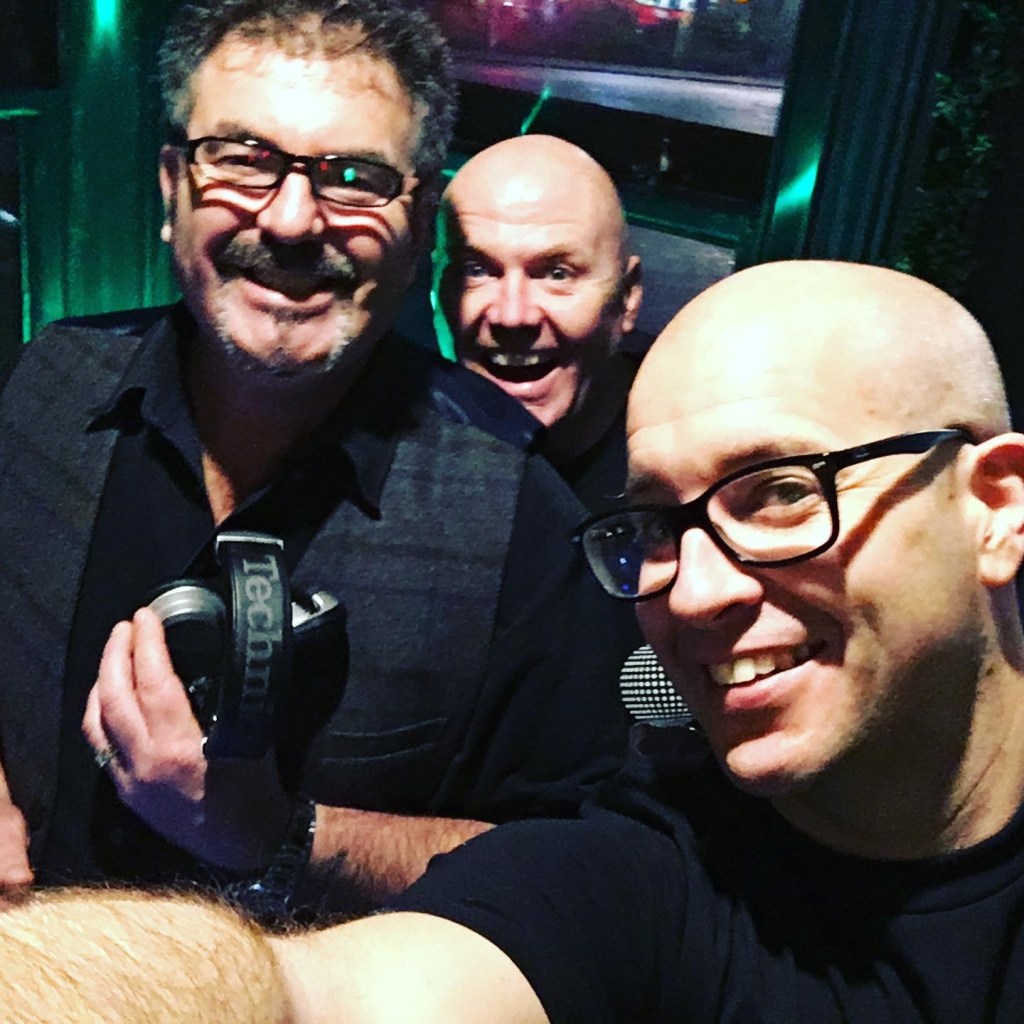
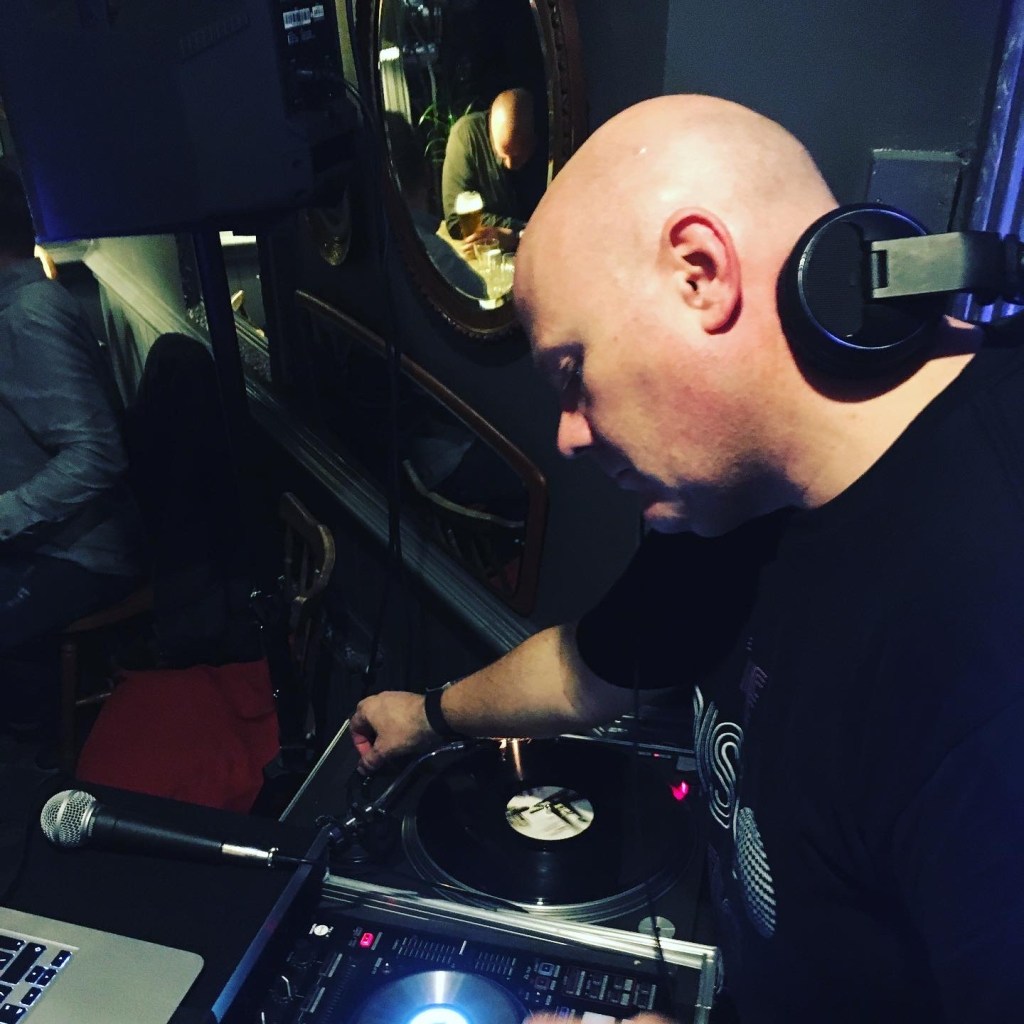
We had a great evening at the Gusto Lounge in Southampton, featuring yours truly, my trusty co-conspirator Kev Muldoon plus a guest appearance from Soul Rejuvenation‘s Shaun Hopkins.

Genre-wise within the soulful house and nu-disco theme we covered a fair amount of ground, with anything from this summer’s Glitterbox anthems to soul classics and a few vocal club anthems to round things off at the end. We even threw in free pizza, and you can’t say fairer than that.

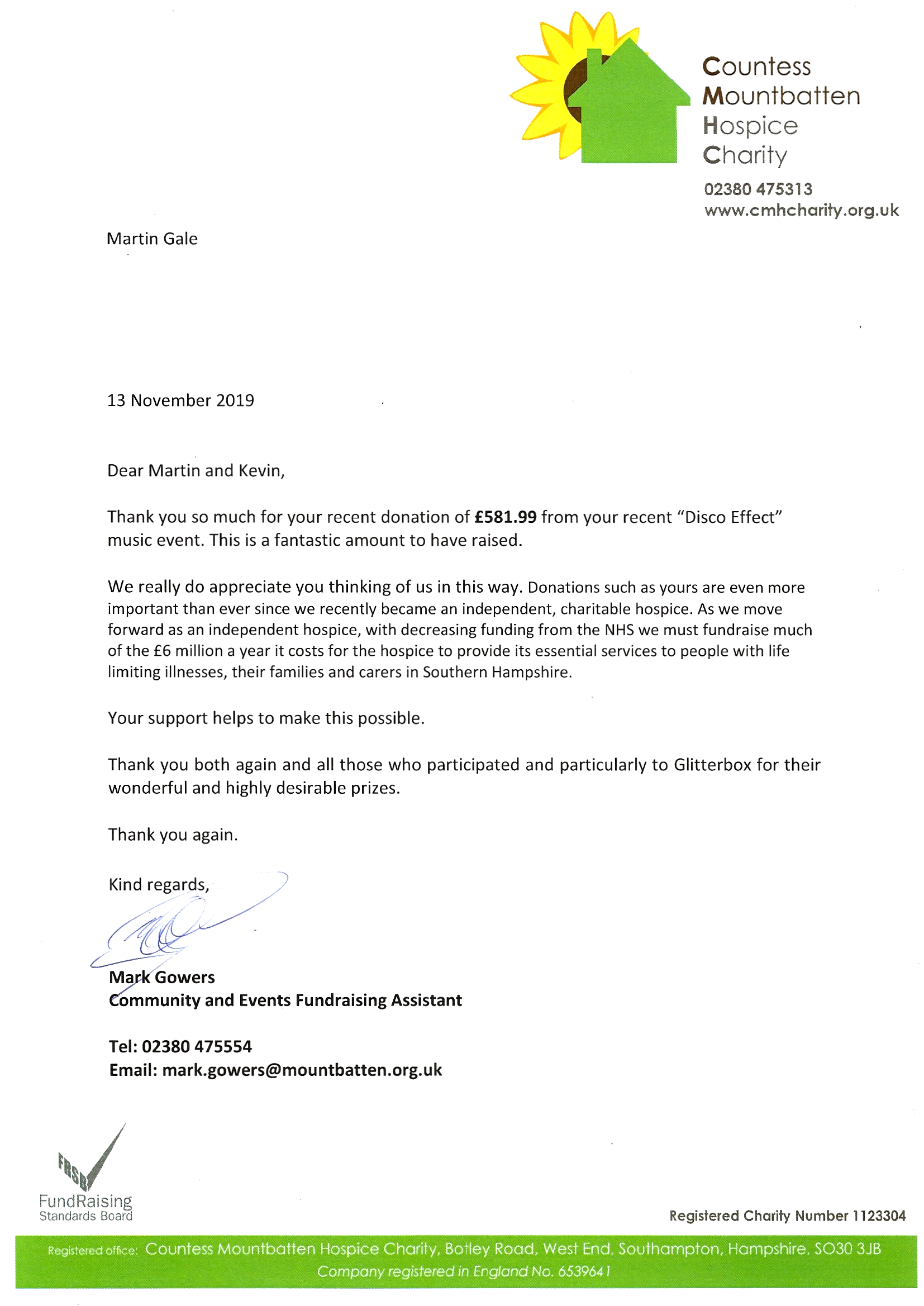
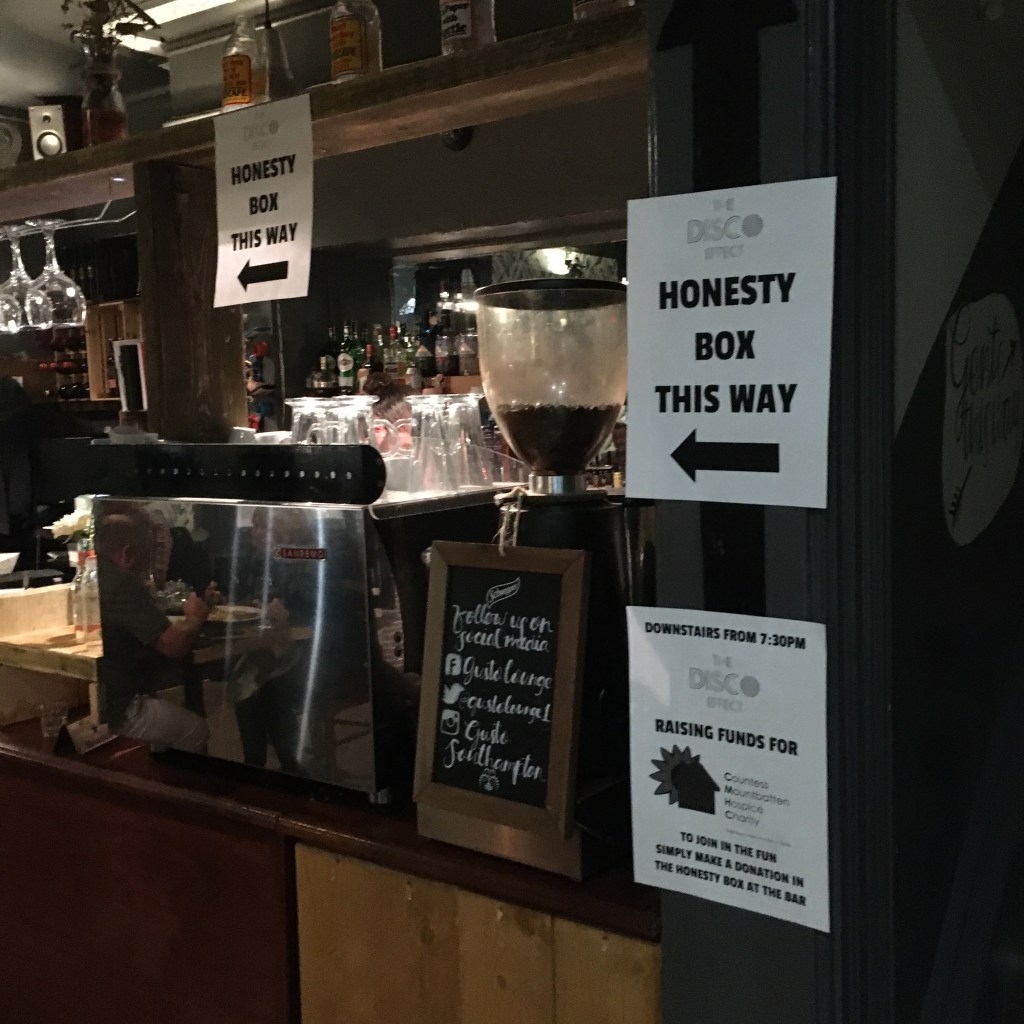
Most importantly, our honesty box and raffle for those amazing raffle prizes raised a whopping £581.99 for the Countess Mountbatten Hospice in Southampton.

Kev and I are now thinking about what to do next based on what we learned this time around. Ideas and suggestions are always welcome of course 🙏🏻

A massive thank you to everyone that helped, donated prizes and joined in the fun on the night. If you missed it and wish to, you can still donate via JustGiving.

Stay tuned for the next one!

The Disco Effect

Spreading a little glitter for good causes

After a really busy summer I’ve had a quieter few weeks putting together a new project.

I’ve regularly lent my skills to support charitable causes, usually by having a bit of fun playing the mobile DJ for the evening. Whilst that’s fulfilling, I’ve long wanted to take my love of house music and channel that passion to raise funds for causes close my heart. The Disco Effect is my first proper go at doing so.

The Disco Effect is the brand that I’ve created to promote events that focus on raising funds for local charities. Inspired by the Glitterbox sound, I’m betting that blend of soulful house and nu-disco will have the effect (see what I did there?) of giving everyone a great night and lead to a healthy amount raised. To raise funds the model is we’ll have either tickets or an honesty box on the door, plus things on the night such as prize raffles or similar.

Our maiden voyage at the Gusto Lounge in Southampton

For our first event I’ve teamed up with long time friend, mentor and Southampton DJ legend Kevin Muldoon and an amazing team of people at the Gusto Lounge in Southampton to raise funds for the Countess Mountbatten Hospice. Both Kevin and I lost much loved immediate family to cancer earlier this year and have particular cause to be thankful for the wonderful work they do.

Thanks to the generosity of the Gusto Lounge we don’t need to charge a fixed ticket price so a donation of some kind on the door will gain you entry. We’re also running a raffle on the night and it’s at this point I must give special thanks to Glitterbox and Defected Records who have generously donated some fabulous prizes to give away. Having written to them in hope rather than expectation I was absolutely stunned at the enthusiastic support and help they offered. They really are wonderful people.

So, if you’re somewhere near Southampton (or could be) on November 9th from 7:30pm do come on down and join us. The Gusto Lounge is walking distance from Southampton Central Station and there’s parking and taxis in good supply nearby so it couldn’t be easier travel-wise.

If all goes well even if you can’t make this one there’ll be another one for you to come to next year 😀

Michael Gray in black and white

On church halls, pseudonyms and remixing for the right reasons

“Someone referred to me yesterday as a machine!” Michael Gray expresses genuine surprise at this observation but whilst maybe made in jest it’s an approximation that bears some scrutiny. His work with Jon Pearn as one half of remix and production duo Full Intention alone constitutes a truly remarkable body of work. He’s also just described a pipeline of releases that includes his own reworks of Sylvester’s You Make Me Feel and Advance’s Take Me To The Top as well as Dr Packer’s forthcoming treatment of his 2004 hit Borderline. “I just love it because I love house music and I love soul music as well.”

The roots of this love affair run deep and begin in childhood. Aged twelve, the young Michael began an international music career in that most British of establishments, the local church hall. His first gigs were regular disco nights. “We did them once a month. When I say we, it was my dad who organised various bits and pieces. We sold all the tickets at the end of one night for the next night.” Starting out playing the very disco records that he would go on to remix later, he progressed into the nascent bar DJ scene before finally making it into nightclubs. It’s typical of his enduring connection with his grounding that he still considers his successful audition for The Park in Kensington his first big break. “[I was] doing the whole Monday night for myself and when you’re eighteen, that’s a bit of a jump – you technically have a bunch of these adults in front of you!”

The next jump would come as a producer for the Disco Mix Club (DMC) subscription service that provided exclusive “megamixes” for DJs. Just such a megamix for the 1990 BRIT Awards peaked at number two in the charts and in the process assured his legacy to the industry by helping to fund the BRIT School in Croydon. It was with America (I Love America) as part of Full Intention however that things really took off. “Everybody from Armand Van Helden to Pete Tong played it, to Tony Humphries.” Curiously they adopted pseudonyms in those early days. “We wanted people to think we were American and not British ‘cos a lot of stuff that was being made in the UK back then was good old piano house bangers and we didn’t want to do that.” So it came to pass that America launched a prolific period as remixers of choice for dance/pop acts of the late noughties. With typical integrity, he can point to times when they stuck to their musical principles when they could have easily made easy money and run. “We had Boys II Men wanted us to remix one of their records and we turned it down because we just felt we couldn’t do a good enough job. We even had their manager say, ‘Look we’re at Gatwick we can come by your studio and re-sing this.’ People we’ve seen in the past remix records just for the money and they don’t really care if the vocals get sped up. It all sounds like Mickey Mouse to us. We do it because we really believe that we could make the record maybe better or cooler.” He discovered becoming a remix producer also had its perks in that it helped others relate more easily to what he was actually doing for work. “It’s quite nice because when you talk to people who are not into the music industry so much and you say you are working with Dannii Minogue or whoever it might be they can relate to what you do.” 

It was on a break from Full Intention, though, that Michael Gray became a household name. Whilst exciting (and lucrative) the remix work had become something of a treadmill. “I was exhausted from lots of record companies saying, ‘Can you make the next remix like the last one?’ You’re not being creative. You get paid a lot of money, but you’re not being as creative as you’d like to be so I went off.” Having spent 2003 pursuing his own alternative production avenues, the second of his two house comeback records in 2004 would at one point blew up so big that the BBC used it for prime time continuity. He still sounds surprised at The Weekend’s success now. “I only made it as a good feel good record for the dance floor, and we only had the chorus – there were no verses! But Eye Industries/Universal Music signed it and it just took off.” Now fifteen years old The Weekend is still played regularly, and not just by those DJs of the time who are still active. This is another cause for surprise and delight for its creator. “I’m really surprised that it still gets played just as much now! When I see younger DJs, big-name DJs dropping it in their sets as well as the Claptones of this world, I never realised that would actually happen.” When we spoke, commemorative remixes were in the offing to mark its mid-teens from Mousse T, Lo Steppa and even an orchestral arrangement by conductor and former Soul II Soul strings man Stephen Hussey. He’s typically energised by the further potential this collaboration has unlocked. “What he’s just done is unbelievable. Completely taken the chorus to another place – I can’t stop playing it!” The horn section is due to be recorded the following week. I make a note to keep checking for its release.

When we’d arranged to talk I’d reflected on how the rebirth of disco and nu-disco in the previous two to three years really made this Michael Gray’s time, given that distinctive soul-house sound he’d spent his career cultivating. He credits one of his peers with creating a modern legitimacy for the sound. “It’s only when Glitterbox come along, with Simon Dunmore setting up that label and that started [people] saying, ‘This is acceptable, this is fine, this is ok.’ And then realising how many people out there want something that’s slightly in the past but also another foot in the future as well.” As our time draws to a close, I ask what he thinks it is that keeps him going. “I think it’s just in your bones. I have always been mad about music even at primary school right the way through. It’s just something that’s there. I don’t think it really goes away. It’s just a massive buzz — no one has to make me push me into the studio. No-one has to make me go and DJ.” 

With a discography like his as a legacy he’s ensured that no-one has to make many of us go and DJ either.
What are the right tunes for that Friday feeling?

A few people have said to me that they like to listen to music whilst they work but that finding the right tracks can be a bit hit and miss.

Thinking about this a bit more I started to wonder whether it might be possible to come up with a set of mixes that set the right mood for people’s working days.

But what would be the right tunes and why?

Moods and keys

Music theory tells us that the key of a piece of music has a huge impact on the emotions it evokes. I’ve long wondered whether if we can work out what type of mood is needed for different times in the working week, we can use the keys of tracks to help find the right tunes to help establish and maintain it.

I did say in a previous post I was a bit of a geek, so I’ve decided to conduct a bit of an experiment to see if it works.

The keys

I decided to pick on Friday morning and afternoon as the two easiest sets of emotions and moods to start with. Based on my own week as a starting point, I’ve identified the following keys that correspond to the mood I’m looking for:

  • Friday morning (“the weekend’s nearly here!”):
    • F# major (2B on the Camelot scale): “Triumph over difficulty, free sigh of relief uttered when hurdles are surmounted; echo of a soul which has fiercely struggled and finally conquered lies in all uses of this key.”
    • Bb major (6B): “Cheerful love, clear conscience, hope aspiration for a better world.”
    • C major (8B): “Completely Pure. Its character is: innocence, simplicity, naïvety, children’s talk.”
  • Friday afternoon (“we made it!”):
    • E major (12B): “Noisy shouts of joy, laughing pleasure and not yet complete, full delight lies in E Major.”
    • D major (10B): “The key of triumph, of Hallejuahs, of war-cries, of victory-rejoicing. Thus, the inviting symphonies, the marches, holiday songs and heaven-rejoicing choruses are set in this key.”
    • A major (11B): “This key includes declarations of innocent love, satisfaction with one’s state of affairs; hope of seeing one’s beloved again when parting; youthful cheerfulness and trust in God.”

The key descriptions come from this paper – it gets more interesting when you know what key some of your favourite tracks are in and compare with the theory. Handily most DJ software will analyse your tracks now.

The mixes

Using the keys above for each, I’ve made two initial mixes to test the theory. I’ve gone with the working title of House Work (get it?) as I’ve stuck with my usual genre of soulful house/nu disco and tempo. If it works, I’ll make more for the other (likely more difficult) days and times.

Try them out and let me know what you think. If we think it works, I’ll do the rest of the week.