Ultra Naté: one woman’s sanity

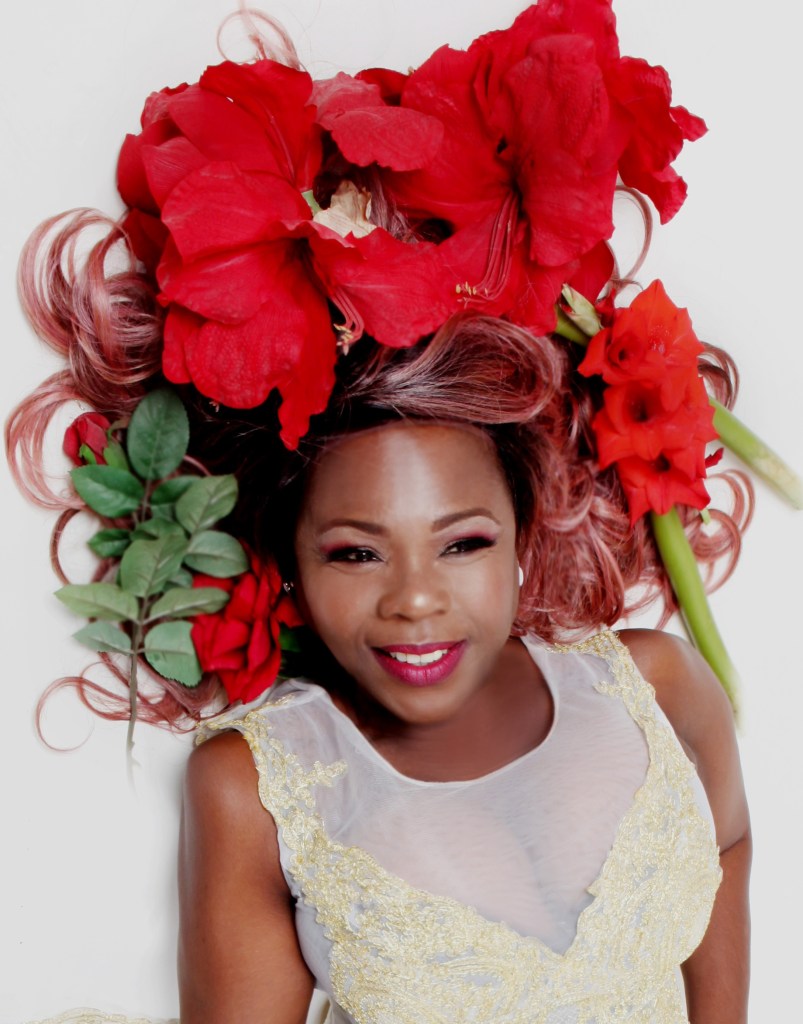
Singer, songwriter, DJ, icon, all round legend Ultra Naté

I wasn’t going to ask about Free. Of course I love the track, it’s literally changed people’s lives and made Ultra Naté a household name but that wasn’t how I wanted to spend our time together. Many words have been written about Free’s story already, and I was very conscious of burning yet more of her precious time asking the same questions she’d heard a thousand times before. Her music career spans more than three decades and whilst the song was undoubtedly a pivotal moment, I felt to reduce such body of work to just one moment would be to do her a massive disservice. No, I wanted to find out what made such a truly remarkable singer, DJ, business woman and icon for the LGBTQ community tick. The Ultra Naté story I would discover is one underpinned by a focus, belief and humility. 

Her first release, 1989’s It’s Over Now saw her make a chart impact in the UK right from the start. That had all begun by accident when she was finding her feet as a medical student after her college prep school, and happened upon the legendary Odell’s night club in Baltimore. Through the local underground dance scene she met The Basement Boys just at the moment they were looking for new vocalists. “They asked me to come in and audition for them because they knew I sang in a church a little bit but I wasn’t really a singer and that wasn’t my path; in the spirit of adventure as a teenager I was like OK sure, I’ll try it!” Her performance of Angela Winbush’s Angel was enough for her first collaboration to begin. The breakthrough came not in the studio though but in a domestic setting. “The first song that I wrote was It’s Over Now. We kind of wrote it at the kitchen on the counter, but it was only lyrics, there was no melody, there was no track and so that night the boys were like ‘We really need to have something to show for our session,’ so they grabbed a random DAT out of the closet, just a random track that I’d never heard and they were like ‘Can you see what you can come up with with this track?’” Her improvisation in the studio was inspired, and soon, things had got serious. “The next thing I knew I was at Warner Brothers with a record deal and on Top of the Pops in the UK!” 

All looked set. An international impact on the nascent dance scene, a record deal with one of the major labels and an effective collaboration. Plain sailing though it was not. “My [Warner Brothers] contract had shifted from the UK company to the US company and I was in deeper waters because now I was with a company who didn’t know or understand club music in the way that the UK and Europe did. It was a much tougher fight to meet the needs of what the US company wanted.” Where previously her formula was informed directly from her own connection with dance music culture, now the pressure was coming for a stream of commercial hits for the US radio market. She gave it her best shot. “We tried to meet that demand of making the sound more commercially viable whilst still maintaining our underground and club roots and being true to our house music community and I think we did that on One Woman’s Insanity as best we could but I don’t think we were in a situation where we were with a label who understood or knew who or how to market a hybrid like that.” Famously of eclectic tastes, did she ever think of switching genres? “Nope! [laughs] During the period of doing Bluenotes in the Basement whatever I was writing it was going on the album, and we were just coming up with these things but really I was just an observer of my own life at that moment because it was so surreal to be on a major record label for someone who had never sang before.” Frustrated at the divergence of Warner’s objectives and her own vision, she found herself without a label between 1994 and 1997.

For many artists that would have been that, and a tale of what might have been. Hearing Ultra describe her thought process at that time, though, is I think the key to understanding why she has achieved what she has for as long as she has. “By that time I felt like, well, I’ve spent the last six or seven years of my life one hundred percent in this and I’ve accomplished something really amazing that I’ve never foresaw why would I abandon it at this moment in my life? I was at that crossroads and I made the decision to go forward. And that’s when I started to write my next album.” What would have been a source of huge anxiety to a lesser artist actually became a point of control for her to stay true to her musical vision. “At that time I wasn’t signed to any labels and I didn’t want to be signed to any labels because it had to be the right label. After coming from a major like Warners, and having product managers and budgets and radio pluggers and the whole shebang that knows how to build a record and get it to the masses, you know, the machine was there. I needed to move into a situation where there was still a machine, but it knew how to work the underground to get it to a commercial level.” Enter Gladys Pizzaro and Strictly Rhythm, and the rest, as they say is history. “She came to me like ‘Just do one single, do one twelve inch with us,’ we were like OK let’s give it a shot. And so we signed for this one twelve inch, and we wrote Free.” Did she have any trouble keeping her feet on the ground? As it transpires, bonds forged and dues paid early on were the key. “People couldn’t really dictate to me what it should be, because I was creating the template, so having that moment to do it in a way where I was fully supported, I wasn’t under pressure to be anything but what I was gave me the foundations.”

As she talks, the level of authority and clarity with which she speaks is striking but in no way intimidating; the sense of purpose in her voice simply emphasises the depth of connection to her art. Furthermore, both Free and its follow up release, Found a Cure, demonstrate a gift for connecting lyrical sentiment to real feelings of hope. When I question where this inspiration springs from she further confirms the sense of a combination of focus and humility. “Whenever I’m doubting myself, and obviously I’m human I doubt everything, everything I write becomes public and it’s there to be nitpicked apart but I always go back to the saying of trust your art. I feel like God speaks to you through your talent. Everyone has a talent, whatever that is and there’s a state you go into where you flow.” As it transpired, Found a Cure was one of the most difficult songs to write because it came with the added pressure of coming after a global smash. Again, the label wanted a stonewall commercial follow-up but again Ultra Naté had her own view. “I felt like safe was not the move, so I needed to do something that pushed a little bit harder at the moment and so I came up with Found a Cure.” Found a Cure’s subsequent achievement of numbers one and six in the US Dance and UK pop charts respectively (against one and four for Free) of course speaks for itself and her decision-making prowess.

We’d spoken a lot about life as a recording artist but how does that compare to her recent endeavours the other side of the decks, as it were, as an international DJ? As it turns out, a love of crowd pleasing is something she and I have in common. “It’s all in the soup, you know, it’s all part of the thing! It’s part of my art thing and an expression of music and just in a different way. I love being behind the decks, I love to play things that I love to dance to.” It also transpires that being a global superstar doesn’t mean you don’t get all the same questions in your head when you turn up to play as the rest of us. “Sometimes it’s difficult when you get booked for gigs in different places, it’s like are they into harder stuff, are they into more tech, do they hate vocals here? You don’t know what you’re stepping into sometimes. As much as we try to enquire about me coming to DJ and make sure they are clear what I play…don’t try to book me and then ask me to play a completely different thing.” I can almost hear a legion of DJs around the world sighing “Amen to that!” But, she’s anything but self indulgent. “I think when you DJ, you get that opportunity once again to make that relationship with the crowd. I don’t like to play at the crowd, I like to play with the crowd. I like to play songs that speak to people.”

During the COVID crisis, she’s been speaking to people through a new medium on internet livestream, and when we spoke she’d just completed her first. Getting to that point was extremely difficult however. “When the pandemic first went down it was like every week somebody was passing that I knew, and I was really just frozen with grief for a while. I just didn’t have the energy to put into that, when it felt like the sky was falling in.” Embracing the medium however she dug deep, and paid tribute to the memory of some special friends. “I call them my Forever Angels, so when I’m stuck, I think about, well, Nashom he would say ‘Come on girl!’ Or Orlando or Gus they would say ‘Come on, girl you gotta do it!’ So I use them as my guides and strength to get over that hump to go forward to finally do that livestream.” As well as the livestreams as a DJ, of course her original artistic outlet still remains. “If the pandemic has done anything it’s slowed me down long enough for me to be at home to concentrate on my writing so I’ve done a ton of writing over the last couple of months so I can cherry pick what makes sense out of what I’ve written what makes sense for the next album that I want to put together.” 

Our time drawing to a close I thank her, and point out that as she’s an honourary Brit (everyone British I mentioned our meeting to, without fail, burst into song immediately) I hope to see her here one day soon. She laughs out loud. “Man! Come on with it!” I somehow manage to hang up with my fingers crossed, feeling both uplifted and delighted. 

And I didn’t ask about Free once either.

Martin Gale, July 2020
Setting the levels with DJ Spen

On the evolution of technology, originality and the challenge of extra large voices

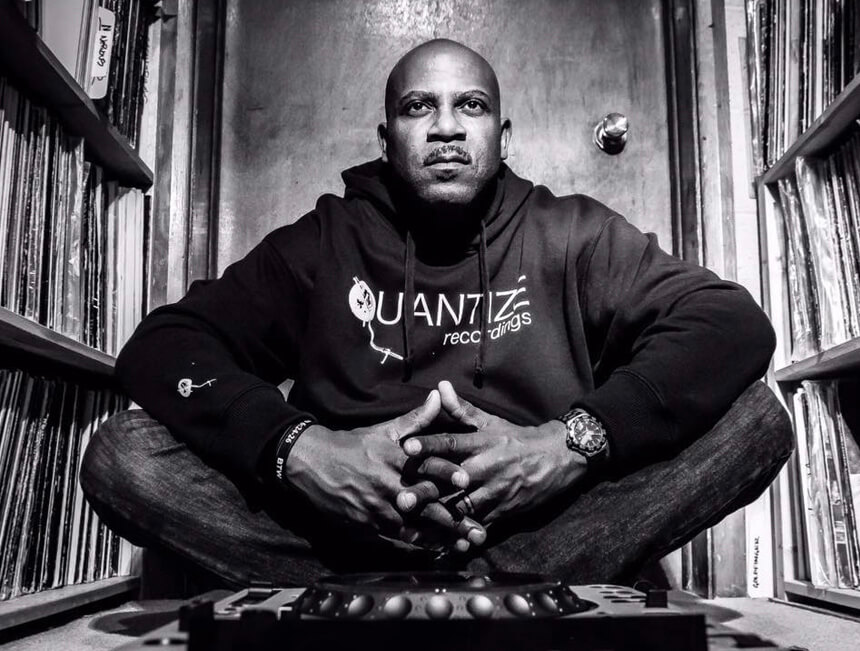
Spen: DJ, producer, legend.

Streaming a live set during the COVID-19 pandemic and rising unrest, you need all the euphoria you can get.

Thumbing through my Rekordbox collection for inspiration, when I arrived at DJ Spen‘s remix of Underground Ministries’ I Shall Not Be Moved my search was over.

This was far from my first Spen play, however, as he’s been a go to producer for me and countless other DJs for decades. As well as a body of house productions dating back to the eighties and The Basement Boys, his Quantize Recordings label has become the hallmark of quality.

What’s the secret of his success? I thought I’d at least try and find out…

A lot going on at the moment – how have you been keeping?

It’s interesting, man, just trying to do what it is that we do and not even trying [since] we’re blessed to able do what we do almost without skipping a beat. It’s becoming more apparent to me that where technology is is hard for a lot of DJs. In the beginning it was hard for me making the switch from vinyl to CDs and then from CDs to MP3s and now you’re going from DJing in front of people to basically DJing in front of a wall in your room! It’s not really that much different from a production point of view. From a human standing, the things that are going on [following the death of George Floyd]… I mean these are really necessary things that need to happen to bring public awareness to police brutality and racism and these kinds of things. What’s even more interesting is that in music, even through the sixties and the early seventies, you had a lot of racially motivated things going on. Music was one of the ways that people were able to kind of accept and understand some things that were going on and I think that’s happening very prevalently today. This whole thing sort of blindsided people but I don’t think these things are happening by mistake, I think these things are necessary.

Some say there’s too many house remixes and not enough originality now yet most of your releases are new material – how do you do it?

It’s hard especially now, I mean you’re looking at a situation where there’s not a lot of monetary resources in music. The classic thing with music [was], especially coming out of the sixties where nobody was making any money out of music really, the seventies came around and there was the money making potential, then in the eighties, I mean forget about it! Michael Jackson, Madonna, Janet Jackson and the like were just huge artists that made it possible for people to make millions doing music and then all of a sudden here comes the MP3 that lessened everybody’s value. Every single person’s value. It levelled the playing field. Because there are less resources it’s harder and harder to create original material. It just is, especially original material of a certain quality but, we’ve just been blessed man. I think a big part of it is that we’ve been around for so long whereas a lot of the newer artists would find it hard to figure out who to get or how to get an artist and the process. We’ve gone from the process of actually recording things to tape, to actual tape! And because we came from that school, all of the things that we’ve learned through the process, sitting in front of a computer now sort of takes all of that information and builds on it to turn it into being a producer now. I think it’s about the experience.

You’ve got a vast amount of collaborations under your belt dating back to the Basement Boys, what are your most memorable ones?

Ann Nesby for sure. The first time we worked with Ann Nesby and we did Praising His Name I was completely blown away. I mean we had written the song, we sent it to her then she came to the studio and she was sick! I didn’t think she was going to come to the session! She trooped through it, she made it to the session and we didn’t know what we were going to get but we had everything set up. She did that song in one take! And when I say she did it in one take, it was actually two takes but the first take she did we underestimated the power of her voice and we had everything set too loud and we had to tell her to go back and do it again and bring all the levels down [laughs] because she just blew everything completely out with the power of her voice. But man, that two take record, nothing more nothing less and that was it.

And who would DJ Spen’s tips be for ones to watch then?

[Laughs] Ones to watch! Aaron K Gray definitely. We’ve worked a lot with Tasha LaRae. She’s done so much work with us because she’s so multi-talented it’s crazy. She’s phenomenal, just phenomenal. Carla Prather, I really like her, a really strong, deep hardcore voice and she knows how to use it. Just to step out of genre a little bit, I mean she’s not up and coming but I think she’s amazing is Ariana Grande with what she’s able to do. Her voice is incredible, not that I necessarily love the material but what she’s able to do vocally is phenomenal work.

Give us some reasons to be cheerful then – what should we be looking out for from you then?

We’ve just finished Thommy Davis‘s album – it’s a great piece of work. Five of the songs on it are brand new. It’s got Stairway to Heaven on it, Barbara Tucker‘s Think is on it, so there’s quite a few biggies that are on it amongst these newer tracks. One of them is a remake of Hot Shot, the Karen Young disco track, there’s also a remake of the O’Jays Darling Darling Baby which is featuring another phenomenal vocalist that we’ve worked with named Randy Roberts, there’s a Love To The World kind of remake and of course Tasha LaRae’s on it, Aaron K Gray’s on it. It’s a whole family affair album, it’s good. It’s very good and we just hope the rest of the world feels the same.

I’m sure they will! Thanks for your time, and all the best of luck!

You’re welcome man!

Flying the world with Birdee

On big beat, big names and big travel

Marooned in Los Angeles post-COVID and struggling to get flights home to Italy, you’d think Birdee might be a bit too stressed to chat. And you’d be wrong. In fact he’s probably the most enthusiastic person I’ve texted in months.

And he has good reason. Arguably one of the breakthrough disco acts of the past year or two, he’s actually provided at least one reason to be glad 2020 happened with his collaboration with Barbara Tucker Free Yourself. Factor in virtuoso remix work with disco house legend Michael Gray and you’ve got all the ingredients for a major player on the scene.

I thought I’d better have a word.

First things first, how are you and how are you coping with the current situation?

I’m pretty good, I’m actually in LA at the moment so not only am I dealing with the Coronavirus but I’m also dealing with the situation that stemmed from the death of George Floyd. It’s been a pretty trying time, I’m hoping this will be a turning point. There’s been a lot of talk about what’s been happening in the music industry as well and lots of people have been very vocal in supporting the Blackout Tuesday thing which has been great. It just feels a little surreal being here, but I think it’s definitely time to have a conversation and change things for good.

I called you a breakthrough act but actually you’ve been very active for a while haven’t you?

Before I started with the Birdee thing I was DJing and producing under a different name and I was active on the breakbeat scene which at the core of it wasn’t that different from what I’m doing today. The root of it was more funk than disco but still coming from the same influences. But yes it’s only been in the last five years that I’ve fully gone back to my roots and re-embraced my disco roots which is what I was listening to when I was growing up. I was born in 1971 so my childhood was rooted in the disco era. I went through a rock phase for a little bit and after I stopped playing in bands I started DJing and producing. But you’re right, I have been doing music for maybe the past twenty years or so, so yes it’s been a while!

You’re an italian living in LA and have travelled the world DJing – for those less travelled, give us a feel for what that’s like.

Well I’ve been lucky enough, I think I moved to London at the right time in 2004, 2005 when I was back in the breakbeat scene. Fabric had a night where they had three rooms where it was just breakbeat and from there it was quite easy to tour internationally. I was lucky enough to go to Australia three times and I just managed to go back to Australia in January just before the whole virus thing took hold of the world so I’m very very thankful for that. It’s just amazing to travel and see the reaction that crowds have to music in different parts of the world. At the risk of stating the obvious there’s nothing more amazing than playing a track that you just finished in the studio and see it get a great reaction in Sydney, for example or Milan or London. It’s just an incredible feeling.

Your recent collaboration Free Yourself with Barbara Tucker is getting great reactions – what’s the story there?

That’s great to hear. So Nick Reach Up who did the track with me, contacted me to say he was coming to LA to attend the Grammys as one of the acts he manages had a Grammy nomination. I was playing some of his tunes, he was playing some of mine so we had a chat and he said “I’m going to be in LA, why don’t we meet up and try and do a track together?” I did know who he was but I didn’t realise he was pretty much a legend; he was an A&R man who had a good word in signing The Prodigy back in the day [and] he had worked with Barbara quite a bit as he was A&R at Positiva when Beautiful People was released. When we worked on the track together it came together pretty quickly in its instrumental form so we were looking for a singer and he casually mentioned “maybe I can ask Barbara to see if she’d be interested,” and I was like “yeah, by all means if you can do that, let’s!” Luckily Barbara really liked the track from the start and it was a great process. It was a bit time consuming because we were all in different parts of the world – Nick was in London, I was in LA, Barbara was in Ibiza for the summer – so it took a bit to get it all together but when we did we were very happy with the results and it’s great to hear it’s got some good reactions.

What’s next for you then?

I’ve just finished a couple of remixes, one is for an American act called Pink Flamingo Rhythm Revue which should be out fairly soon. I’m finishing a remix for a friend of mine called Per Qx, a Swedish producer (he’s actually the guy that introduced me to Seamus Haji a few years ago) and I’ve also got a couple of EPs lined up and I’m finishing off a few more tracks. Obviously I’ve got a lot of time in the studio like everyone else, so there’ll be a lot more music coming from me very very soon.

Thanks for chatting, and all the best for your travels back to Italy

Thanks man, I appreciate it!

Just a little bit about Kym Sims

On jingles, demos and the power of making people laugh

I’ve seen Kym Sims having a shower. It wasn’t just me and it was at a distance of several thousand miles but nonetheless that makes her unique amongst the artists I play when I’m DJing. As COVID public safety announcement it was certainly the one I’ve remembered most. 

Jingles, garage tunes, health advice – Kym Sims has it all

But that’s not the main reason Kym Sims is so memorable of course.

My first, and more orthodox, introduction was like many people my age listening to the pop charts of 1992. Her garage house sass made her a crossover smash when Too Blind To See It and Take My Advice hit both the dancefloors and the charts. Wind forward to 2020 and the reaction I still get to playing Too Blind To See It only confirms to me just how big an impact her tracks have had on people over the years.

Given I felt I owed her one for crowd reactions over the years (and for the health advice), I thought it was about time I tracked her down to see how she was doing…

First things first, how are you? Are you keeping well in these worrying times?

Oh my goodness! Yes I’m just keeping myself safe and trying not to watch all of the negative stuff, but sometimes you’ve got to take your head out of the sand and watch. It’s horrible but yes, thanks for asking, I’m doing well.

Did you think back in 1992 you’d be still talking about Too Blind To See It thirty years or so later?

No, I really really didn’t! I personally was not a big fan of it, not to say it was a bad song but, you know, some songs sort of it hit you so I was like whatever! I considered myself a pop singer or soul singer, not so much dance or garage but here we are.

I remember reading that you started out singing jingles, did I remember that right?

You did, you did! The man who gave me my big break was called Paul David Wilson and he ran a jingle house. He had advertising agencies who had clients like McDonalds, Pizza Hut, Sears, Coca Cola, Pillsbury Poppin’ Fresh Dough – anything you could think of. He saw me at a pageant and he liked my voice and asked me if I’d done jingles before, and I said no and I ended up doing that for five or six years.

So how did you get into house music then?

Yeah I just sort of fell into house music. A friend of mine’s husband was a DJ and they had a party one weekend, and she asked me if I could sing for a friend of ours. I believe the producer was there with his partner and he said I should come in and record a song he had. I said OK, I recorded Too Blind To See It and the rest is history!

I discovered you also co-wrote another favourite track of mine, Keep On Walking by Cece Peniston – what’s the story there?

Keep On Walking was a song that I wrote for me and I demoed it. We all said that it would be a nice follow up and we should do it, and somewhere in the middle it became Cece’s song. The first time I heard about it was on the radio! She did an awesome job, just the whole attitude and what she brought to it – I won’t say no one else can sing it because I sang it and it was my song but she damn, damn, damn did a damn good job!

Were you surprised by the impact you had on the UK and European charts at the time?

Yeah, I had no clue. When you’re in the throes of something you don’t get the opportunity to stop and smell the roses. I was so busy wondering why I wasn’t getting the love over here, without wishing to disrespect people over there [in Europe], but I just didn’t understand it. I was just going to dates and singing and coming back to my normal life. I saw the people around me I was working with like the producers on the rise from a financial standpoint but it wasn’t happening for me. I was just happy singing and I went with it but I didn’t really see the effects until further down the line and everything was coming from the other side of the Pond. You all show me more love than anyone on this side so it means alot.

What were your fondest memories of those days?

Well I was a young mother, and I remember when I was flying home I’d have to stop at the airport and buy something special for my kids so they’d have some memory of my journey. Everywhere I went throughout the eighteen years of the whole Too Blind To See It journey – Dubai, Abu Dhabi, Germany – I’d have to get new shoes, my daughter got puppets, my son had his ear pierced so I’d bring an earring home. Now he’ll be thirty five in a few weeks, and my daughter will be thirty two in September and she has two kids. Now I do it for all my babies, all my little ones!

After that mainstream era in the pop charts how did you find being in the underground scene?

I feel like I took a break, not a wanted break, but almost a “we don’t want you” break. I didn’t feel like I could find my zen. I was asked to do a revocal of Too Blind To See It by the folks I did it with originally but I wasn’t very keen on doing it and once the vocals were done I wasn’t pleased with the outcome. I have come to the realisation and the point now [however] where I’m going to remake Too Blind To See It 2020 edition and I’m going to do it my way! The music business is so crazy with the financial side so if there’s any money to be made it won’t be my pockets to be lined, but if it gets me gigs and it gets me out there and it happens to do well, I’m happy. Then I’ve got another song called Love’s Got A Hold On Me that we’re just about to release that’s got a nice vibe and is getting some good feedback so I’m excited about that. Now it feels so great to be able to sing the songs only for that reason, and not for the lights not to be cut off or to pay a bill. Now it’s just about me and giving the quality that I want and hoping that everyone enjoys it too.

Your shower scene was probably my favourite COVID health warning! How do you maintain that energy?

That’s so funny you say that! My friends would say I’m just crazy! You know what, I have my moments, I’ve suffered with depression and I’ve had so many things that have happened in my life like everybody else but the difference is it took its toll on me in a different way. I found that in order to get myself out of that I have to do something silly and get acknowledged by somebody for it. I’m like “I’m gonna do something silly, and I’m gonna make somebody laugh!” I continue with the foolery because it makes people laugh. What you see is what you get, I’m the same person. I’ve got a circle that I’m complete with, I’ve got a good family home and people around me that support me so for me to do something silly is easy because I’m in a happy place.

Well I’m really glad to hear it, it’s been an honour to chat with you.

I appreciate it and I thank you so much for finding me out here in the midst of all these divas! You found little old Kym Sims, I appreciate it!

Tales of the unexpected with Pauline Henry

On telephone auditions, academic indecision and astrological premonitions

It’s always a good sign when there’s a celestial plan for your interview. “About four days ago, I dreamt I was about to meet this Virgo person! Well you’re the second Virgo person I’ve met today and we’ve hit it off!” If Bono says you’ve covered one of his best known tracks better than anyone it indicates you’ve got serious talent, but I hadn’t reckoned on Pauline Henry having second sight as well. We were speaking on a Friday evening and already I’d sensed from her text messages ahead of the meeting a definite sense of respect and of wanting to do the right thing. As we get started the reason for this, and her instinct for Virgos, soon becomes clear.

Singer, lawyer, dedicated mum – the multi-talented Pauline Henry

“My dad was a Virgo, he was so clever. He was so smart and so well spoken, he was a proper English gent. My dad is probably the most fascinating human being I will ever meet.” Even allowing for family ties, when as a singer you’ve had top ten hits, a track you made over thirty years ago is still being remixed and you hold multiple degrees that’s quite accolade. “In Jamaica they would say he ran t’ings. When we came from Jamaica the first thing he gave us four kids, all four of us, he gave gold fountain pens. That’s how my dad rolled.” She was ten when she arrived in the UK from Jamaica as the sixties turned to the seventies. Not yet having had huge exposure to music from other parts of the world, it was in this period her musical affinities were formed. “This was of course the Motown era, which I still think to this day is the best. Not just Motown, just that era for vintage music. Aretha, Stevie, Marvin, do I have to choose?” Familiar influences perhaps for a soul singer but the journey from stargazing teenager to the Top 40 was anything but.

Without a particularly musical family context or stage school to provide a pathway, fate decided to lend a hand. As the seventies turned to the eighties, she found herself working in a hair salon, though with some particularly discerning clients. “I ended up attracting all the artists, like for example Boy George’s boyfriend Marilyn, and Leee John of Imagination, I was doing their hair.” Her clientele encouraged her singing, and then serendipity struck again when she happened to meet a man in the music business whilst holidaying in Tenerife. “We just used to meet up on the beach and talk about music. By the time I came back to England I thought ‘I just want to do this thing.’ And then I started to get lessons and started to train.” Her peculiar path to a music career continued, as on a trip to America she happened on a Colombian opera singer who gave her lessons. And then came a call that would change her life. “One day, whilst I’m out doing sessions, learning my craft I get a call from a lady I’ve never met, who says ‘I know a band looking for a singer and I put your name forward.’ How did she know me? I’ve never met her, I don’t know her, but it turns out to be The Chimes.” Having auditioned singers who hadn’t made the cut in person in Scotland, the band decided to reduce their expense bill this time by first having her sing down the telephone. A canter through Chaka Khan’s Ain’t Nobody down the receiver was enough to convince the group to take the plunge and finally fly her up. The rest, of course, was history.

She would prove the missing piece The Chimes had been seeking. Their debut singles 1-2-3 and Heaven quickly became dance music staples and in the case of Heaven attracted remix attention for the next thirty years. Once again, though, lady luck combined with Henry’s talent and drive to propel them into the Top 10. She had previously been particularly enamoured with the gospel flavour of U2’s I Still Haven’t Found What I’m Looking For and naturally enough had been experimenting with applying a similar treatment to the main verses. “Our first TV gig was in Scotland and they asked us to do the single as well as a cover. Mike Peden [Chimes band member] turns to me and says ‘Pauline, what’s that song you were singing again?’” And just like that it became The Chimes’ next single, reaching number six in the UK charts. She laughs, “I’m writing my book, I’ve decided to call it Tales of the Unexpected!” But the surprises didn’t end there, as the song’s originator would publicly give his stamp of approval, stating that at last “someone’s come along to sing it properly.” Whilst she was flattered it wasn’t until relatively recently she understood why. “For years I never understood what he meant by that! Only about five years ago something popped up on YouTube about how Bono wanted a gospel feel to it, hence why they went to New York and the Harlem Gospel Choir. And then it was like tada! Eureka moment.” 

Pop music careers, however, tend to be ephemeral and by 1996, she found herself without a label. With a positivity I was growing to admire the more we spoke, she saw this moment as an opportunity. “I thought ‘great!’ Because music’s like a conveyor belt, you don’t have time to think about family life. So as soon as I got out of that I had my daughter and settled into the normality of family life.” She actually found that motherhood changed her perspective on music too. “I just wanted more stability. You’ve been in the limelight and I was ready to just be normal.” Her appetite for music did return, but practicality intervened and with Venus in her early years and finding herself a single mother, her priority was stability. She settled into a happy life as a stay-at-home mum and became as enthusiastic as a part-time student as a degree in Law and a Masters in Intellectual Property Law suggests. I made the mistake, however, of assuming it ended there. “How very dare you miss out my chef’s degree! I did the chef degree with the law degree because I couldn’t decide what I was most passionate about.” Having a successful recording career and then gaining a law degree afterwards would be impressive, but at this point I was struggling to get beyond a rather feeble ‘Wow!’ The affinity with the legal world is clearly in the genes as Venus is now a law student herself at Cambridge University which is in itself a testament to her mother’s commitment to her parenting. It didn’t end there either, for Pauline also achieved qualifications in Spanish and Italian at the same time. 

And so to today, where fortune appears to have settled her into two parallel streams that cross with the intellectual property aspect of her Diamond in Venus label, and the successful licensing of Heaven to soulful house music’s A-list producers. As an entrepreneur at heart she also continues to look for ways to help and encourage others both in the legal and music trades. She continues to perform, with an appearance scheduled at International Soul Divas tour in Australia for September 2020. At the time we spoke the Coronavirus outbreak was just starting to throw international travel into chaos (“No flights to Jamaica! I mean hello!”), but as one might expect there’s plenty to occupy her in the meantime. She’s been nominated for an award (“It’s called a Wintrade Award, and it’s very prestigious!”) and has designs on a reggae adaptation of I Still Haven’t Found What I’m Looking For if the licensing practicalities can be overcome. 

And knowing Pauline Henry who would bet against her?

Martin Gale, March 2020