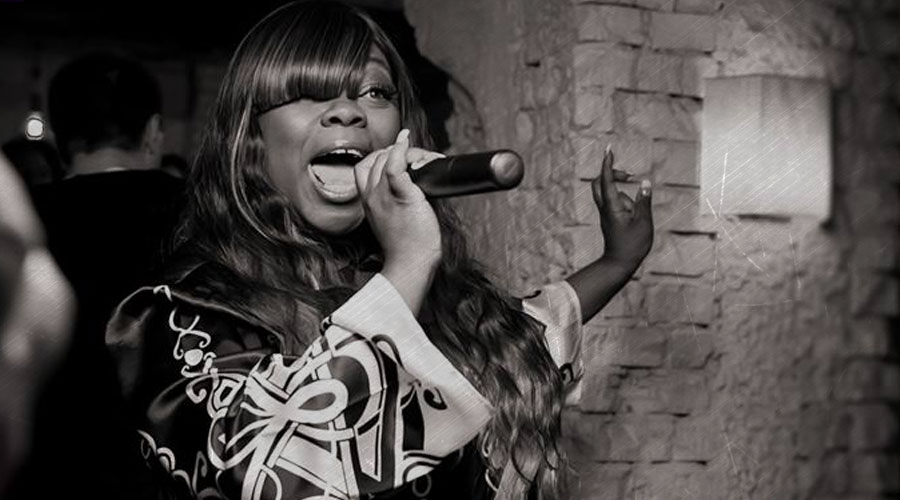
Pushing through with Venessa Jackson

The Rainbow Nation’s very own Venessa Jackson

In the soulful house world Venessa Jackson was one of the most prolific artists around in 2020, with the hits seemingly just keeping on coming from her South African home. Despite everything going on in the world her Facebook feed was an ongoing tale of creativity and a sense of an opportunity being seized out of the chaos.

Having enjoyed playing the output of her efforts, I was determined to find out more about the person behind the music, and how she stays so positive. I was also curious as to why when she sings with such maturity how it was that she still seems to have newcomer status.

I started with my now-standard question of 2020…

How have you been in this funny old year then?

I cannot complain, funnily enough it’s been one of the busiest of my career. I think the lockdown has been beneficial for some and not so beneficial for others because for me, lockdown has forced people like record label owners and producers to be indoors with nothing else to do but browse music, watch movies and produce ideas so it’s given people within that field the time to check out my music and have more time to listen to my capabilities. And for those that have been focused on production it’s given them the opportunity to work with me whereas before, when life was normal, they never had the time to. To be honest with you this [year] 2020, it was very beneficial for me. I was really blessed and fortunate this year.

I’ve seen you mostly over the last couple of years but you’re clearly an accomplished singer – how did you get here?

I was put on the stage from a very young age; my mother was one of those obsessive mums and would buy every newspaper and every magazine and page through it for every kiddies’ contest with dancing or modeling or any talent contest [laughs]. She put me up in those contests from a very young age. I won my first competition, it was a dance competition and the prize was a vinyl [record] so my first vinyl was at the age of five and it was Kool and The Gang! I was so amazed by this and luckily enough my mother had this gadget that played this plastic circle (in my mind as a five year old). My mum would play it for me and I was so amazed – I was like “wow, one day I want my name on one of these!” It was on my wishlist from when I was very young, so music was something that I went into from a very young age. It was something that was just in me growing up. And then throughout primary school I participated in the community variety shows that we had in the area and I would sing there. Throughout high school I did the same thing so I would say it was just in my genes. I did music basically for fun for many many years underground, not even taking it seriously until I started getting bookings and I was like “wait, hold on, can I actually make a living out of doing this?” So in 2004 EMI broke my virginity into the business side of the music industry and from 2004 I’ve been building the Venessa Jackson brand from then. So when I’m referred to as an upcoming artist it’s just for those who don’t know how long I’ve been pushing this hassle! I’ve [sings] been around the world and I, I, I… I’ve been there, it’s just that many people are not aware of it. I feel that the music industry will embarrass you before it glorifies you and you’ve got to go through those embarrassing stages of where you get exploited, where you work for free and where you’ve got to promote yourself and all those things. I feel that I have done the groundwork and now I’m at the stage where I feel that I’m reaping the rewards for all the seeds that I’ve planted over the years.

I’ll be honest I know very little about the South African scene – what’s a like down there?

Oh we love to party! We love to party even in serious times. In South Africa you do not need a day, it’s like all the time. We are very happy-go-lucky – we’re called the rainbow nation for a reason because people from all over the world are here and we are living together in harmony, just like happy-go-lucky and we are partying!

I really want to visit now!

Oh you must! [laughs]

I’m curious about your style – I think of you as an amazing mix of house diva and blues, where does that come from?

I think [it comes from] the music that my mum used to listen to. I used to listen to whatever my mum played whilst she was cleaning the house and she played Billy-Ray Cyrus, Dolly Parton, UB40, Gladys Knight, she was obsessed over Tina Turner [laughs], Anita Baker… I think listening to all that and me being me, the kid that loved imitating, and I had a very good memory as well and I was very very talkative… So I think writing and singing, there was no other way to go. I think the music that my mum listened to had a major influence on the music that I do right now. I never went to music school or anything like that, I’m just learning as I go along. As I get new productions on a weekly basis, the melodies are guiding me into singing a certain way. I’m like, “Wow, I’ve never sung in that key before!” I’m still learning about myself and my vocal abilities even after all these years. It’s crazy.

You’ve been enjoying yourself with a variety of different producers, for example Yam Who and Mark Brickman – how’s that been?

Oh my gosh, so much fun! The first one was Push Through that I did with Luisen, then Yam Who did a remix as well. But the majority of funk and disco tracks have been with Midnight Riot and Mark Brickman. I’ve been having so much fun and I’ve found out from these type of projects that the flow and the writing and the storytelling and the concepts behind the stories are so exciting you could picture yourself shooting a music video or even having a movie from the storyline in that it’s so entertaining and interesting. I’m really having lots of fun in that genre.

You clearly are – best of luck and thanks for talking to me today!

Thanks for your support, I really really appreciate it!

I get lifted with Barbara Tucker

On divine inspiration, musical fair play and doing good whilst doing well

Singer, songwriter, stylist, choreographer, promoter, legend: Barbara Tucker

The standard greeting of 2020: how have you been in these strange times? “What I believe in is good, and what I choose to put my faith in is all good. Amen!” When someone sings with the spiritual belief that Barbara Tucker does, it’s no surprise that her recipe for health and sanity in the COVID era is a heavenly one. “That’s why I can say I feel good, and I feel so creative at this time. It’s strange but because of whom I believe in and my faith has allowed me to be well.” 

There’s a also celestial connection that she believes has profoundly influenced the path of her musical career. “I think it’s that Pisces/Aries thing – we tend to have a lot of creativity about us so we just tend to do everything as we feel and without any goal of where we want it to go!” She began with a promising career in musical theatre. “I’ve done off-Broadway plays in New York and I’ve received an award in 1986 for the most promising artist with a distinguishing artistry through the American Theatre of Actors but I didn’t follow that so much because I was doing background singing and choreographing.” A cover of Strafe’s Paradise Garage anthem Set it Off and work with production icon Tommy Musto followed, but her butterfly instincts remained. “I was able to record here and there, as that was not my main thing because I was doing things like singing, and dancing and club promoting! [laughs] I think that’s why somebody called me the Queen of House because I was embodying the dance scene, the night scene.”

Ironically perhaps it was her diverse range of skills that made her a target as a vocalist for legendary Strictly Rhythm A&R Gladys Pizzaro. “I choreographed for one of their artists, Butch Quick, and also did background for him on his projects and Gladys, I didn’t even know she knew of me, she was like ‘I always wanted to work with you,’ because I was also a club promoter promoting music with my partner Don Welch of The Underground Network.” Given that she’s synonymous with Strictly Rhythm at a time when the label was for many in its halcyon days, it’s no surprise that even her contract was extraordinary. “I was signed for six years, I was the longest serving house artist at that time signed to a house label — people were signing tracks, like now, they don’t really sign artists, they don’t really mould them and shape them. But Gladys said ‘We don’t really know what to do with you!’ because I styled myself, I choreographed for myself, I did my own shows [laughs].” The influence of the Strictly Rhythm family was profound, and is reflected in her own philosophy on the relationship a label should have with its artist. “I don’t believe in, ‘Oh we’re just gonna do one song with you.’ No! Sign an artist for three songs, give them some momentum, give them some play and Strictly was wise enough to have Strictly UK, and also licensing the records, that’s really important because you can’t do it yourself.”

Thinking back to that period, for all I loved Beautiful People like everyone else, I’d always rated her 1997 B-Crew production Partay Feeling as an all time favourite because it reflected the calibre of artist on the roster at that time. It turns out she too has fond memories of the project. “Thank you, somebody knows the song! That’s my concept, I loved that song, I loved what the B-Crew was about.” The selection of the B-Crew themselves was no accident either. “I had chosen Mone because, look, she’s the vanilla chocolate of house, I don’t know where she is these days but you hear that girl? One of my favourite artists is Dajae. She’s fun, I like the fact that she dances when she sings, she’s always fun.” And then, of course there was the other lady of that moment. “This was around the time that Strictly had just signed Ultra [Nate] so Gladys says ‘hey, why don’t you put Ultra in it as well?’” The late Erick Morillo completed the project also at Pizzaro’s instigation to revamp the production. On the subject of producers, she has a few things would-be collaborators should bear in mind when they come knocking. Showing respect is the first thing. “Don’t just say ‘oh, can we do a collaboration?’ And I don’t know your work, who are you? Are you using my branding to move up? What is it that you want from me?” Having a musical vision comes next. “Bring the song, let me see where you’re coming from. Are you looking for my voice to create the melody of the song?” And finally, of course, the commercial angle. “What is the plan? Do you have a label? Are you shopping it because my voice is on it? What is the intention of this project that you are doing? Don’t come empty handed. Amen! [laughs]” 

She’s Barbara Tucker and she’s assertive when she talks but is in no way stand-offish and when she calls for respect it’s clear that with her it’s a two-way street. I’d recalled some years before reading an interview with her where she talked about the term diva having a particular meaning and not to be used lightly. Unsurprisingly she still has strong beliefs the term should not be used without its divine connotation. “A diva is not you with an attitude, ‘Well I asked for this, I didn’t ask for that! Oh I need this in my bathroom not that!’ What is that? That’s a luciferarian spirit that ‘I, I, I, I need it, I’m the greatest and I’m this.’” It’s also a mindset that translates into the energy she puts into her work, for example a commitment to connect with her audience beyond the performance that I found deeply touching. “I like to create moments that someone can remember, because I don’t know what you’re going back home to. We’re here in Ibiza, we’re here at the Blue Marlin or the Children of the Eighties or Glitterbox and you just want to forget about…’I had the worst day at work, I had to work so hard to pay for this vacation…’ I want to create moments and an atmosphere that people can enjoy and forget their troubles or get through them with a strength and a power that is always inside of you. That’s what I think a diva can do.”

A diva it seems can make a positive impact on the world beyond her music, in her case with regard to philanthropy. “You can’t tell me ‘Oh I love God, and I’m singing this song, and it’s gospel house and it’s all this, and you have yet to go volunteer in a shelter, help clothe somebody, help feed somebody, so really?” Working with Dr Glenn Toby, himself a hip hop and garage performer of renown, she’s a major contributor to The Book Bank Foundation which promotes literacy with underprivileged children and adults. “We started off giving one book at a time to homeless families, and from there we collect clothing, toiletries, we bring forth inspiration and song and at Christmas we go round anything up to ten shelters a day.” It’s no surprise to learn also that she’s not one for the proverbial gloved hand of the distant celebrity; she likes to get involved on the ground. “I don’t care to give to million dollar foundations or fundraisers, let’s just get on the street, ‘cos we don’t know how that money will go. Not ‘Oh I just did a track and it had the legends and all these singers and musicians…’ OK, so you did a track and God’s blessed you, now what are you doing for the people? What are you giving back?”

Talking of public service, I was curious to know whether she was aware how well received her track Free Yourself with Birdee and Nick Reachup was in the gloomy lockdown days of 2020. When I asked, her answer revealed yet another insight into recording life I hadn’t expected. “I didn’t know that because, you know, here in New York people they tend to stay with their sound. If you have a producer who’s a DJ he plays his stuff or things he has alliances with so you don’t always get to hear your music, that’s why I love the UK, why I love overseas because the producers, the DJs can be authentic to music in general.” With an album track for E-Smoove in the works, plus collaboration on an album with Georgie Porgie and Kyle “Small” Smith it’s a service we can rely on into 2021 too but typically she has wise words for us DJs. “Don’t just play it because it’s on the label, don’t just play it because that’s what the big boss says. If it’s good, let it play.” 

As the lady herself might say herself, amen.

Thought ya knew about CeCe Peniston?

On having swag, social media and impeccable standards

House music royalty, the one and only CeCe Peniston.

My phone rang and an English accent greeted me at the other end of the call. Wait, CeCe Peniston‘s a Brit? “Oh, hello,” I fumbled, hastily striking a line through my question about her influence on this side of the Pond. Thankfully she put me out of my misery and with a chuckle segued easily back into her native American tones, but seriously, her accent was good. Well, she had me going anyway.

Having set up the interview with her team, I’d spent some time doing research into her life and career and there’s a lot of it. In recent times she’s also embraced social media as openly as anyone, so there was no shortage of things for us to get stuck into…

So whenever I mention your name, British people sing at me – how does it feel to be adopted by us?

[Laughs] You know what I feel so blessed, I can’t even tell you. When I first started out with Finally and I was like, twenty years old, and it was one of those things where Finally was a poem that I wrote when I was in college but I always knew I was going to sing. I ended up doing backing vocals and they were like “do you have anything else?” And I was like “yeah, I have this one song,” which was Finally and I had no idea that since the nineties it would still be as popular and people would love it to this day.

When did you realise you’d made it beyond the US?

When I was walking down a street and someone was like, “CECE!” and I was like, “Great!” [Laughs] You know what I’m saying? I didn’t know them but they were like, “we love your music!” Or I would go to crowds and perform and all of a sudden everyone’s mouthing the words and would just pause for a minute with this smile on my face thinking, “wow, they know my lyrics!”

You were a celebrated beauty queen before becoming a house music legend – what happened there then?

What happened was I was singing around Arizona in different shows, karaoke and different stuff and there was a producer, Felipe [Delgado] who was working with A&M [Records] at the time who said, “hey Ce, I want to bring you on to do some things, but I’m not ready yet, I’ll keep you posted.” Fast forward, and all of a sudden it was [Tonya Davis AKA Overweight Pooch tracks] Kickin’ Da Blues and it was Female Preacher and then when I did [sings] “I like it, mmmm hmmm,” I did that right? They said give it all you got, and that’s where the signature when you hear [sings CeCe trademark ad lib] “nana mmm, yeah yeahh” was born. That was born even way before Finally was brought into the picture. And then they said, “who was that fierce singer in the back?” And I said, “it’s me! It’s me!” And so they said we would like to sign you up with your own deal, we recorded Finally and then magic happened.

That garage house sound of the early nineties was kind of yours, what was the special ingredient?

I know you’re going to laugh at this but I think part of it was the [sings CeCe ad lib once more] “mm na um, um na ooah”, it was called “I forgot the words!” [Laughs] The other part is I think what we call, you know, my swag and my energy. It was probably a mix between house and dance and jazz. Because I used to listen to Billie Holliday when I was younger, and so that little thing, and I also used to listen to Chaka Khan, and so it was that mixture of dance, house and having your own signature and my cadence.

Say I’m a young producer trying to get CeCe Peniston’s attention, what is it that makes you say yes to a collaboration?

You know what right now with the [COVID] pandemic it’s making things really hard. I had things that happened before that I need to get into the studio with and the studio is booked so I’ve kind of stopped saying yes at this moment because people expect me to get stuff done and I’m like hey, it’s not me. I can only do what the world provides right now so in order for there not to be a pressure or a problem I’ve kind of cut back on that and then I notice that sometimes I would get in with producers and they would be greedy and selfish and they wouldn’t pay me! And I’m like I’m not doing stuff y’all, I’m doing stuff for me. You know what the funny thing is, and people don’t understand, it wasn’t like I didn’t have paperwork but sometimes people have signed things up when I’ve given them proper paperwork, they’ve signed things up under what they wanted it to be, or they’re like, “hey, it’s not recouped,” and I’m like, “well that was ten years ago that we recorded it, and there’s ten more compilations so let’s think of another lie!” [Laughs]

Assuming then we’re still friends and in the studio, how would I get the best out of you?

Oh I always give my best, no matter what I’m doing in the studio. I’m harder on myself than other people who might be, “that’s great!” and I’m like “no, it’s not – it’s not what my great is. It’s what you think my great is but it’s not what I think my great is.” I’m harder than other people probably sometimes about how my vocal should sound in fact, and this may crack you up, but me and a producer got into a verbal fight! He’s like, “it sounds great!” and I said, “no it doesn’t and I want to do it over!” And he was like, “well you’re the only one who wants to do it over!” and I’m like, “And? So what does that mean? You have one chance to make a first impression with everybody that’s listening to you and you as a producer should be happy that if I want to do it over that means I want it to be the greatest and the best, and what’s wrong with being the best?” And then they couldn’t argue and they gave me another version.

You’ve really embraced social media openly, how do you think that’s changed how an artist is these days?

I feel like you have to figure out what is private for you and what is public for you. Before I felt like there was a different respect for artists, people weren’t trying to get into your private business, they wanted to know what it was like, they would get the blogs put out it would be straight from the horse’s mouth, they would probably get a story sold to them. Now everything is in real time and if someone wants to say something foul about you on Instagram or in the comments now you’ve got to defend yourself, like “hey, jackass!” I’m one of those people. I’m like get off my feed with the dumbness, okay? And people laugh at me, they’re like, “are you really gonna say that to them?” and I’m like, “they said it to me!” [Laughs] It’s my feed, I’m like you have to control the narrative of what happens on your page so I’m sat there not caring what you think but also you’re not going to be disrespectful so that’s how I am.

Finally then, no pun intended, you’ve sung for Bill Clinton, the Pope and Aretha Franklin, what can we expect to see from you next?

[Laughs] Well I have a song ready to come out with Jackie’s Boy, he’s a Grammy award-winning producer who just did a record with Shawn Stockman so that’s coming out. I’m actually working on a virtual show called Remake vs Original, plus still doing my fitness and making sure I’m not being a little fatty during quarantine [laughs]!

Well having listened to you since the beginning it’s great to meet you – thanks for stopping by!

Thank you, have a beautiful day!

Not so nasty girl

Inaya Day talks divine inspiration, longevity and European connections

International house music legend, Inaya Day

It’s always interesting preparation for an interview to gauge the reaction of others when you tell them who it is you’re about to chat to. In some cases people just burst into song because of a particular chart success or memorable moment soundtracked in their own lives. In others people maybe squint and chin-stroke at some degree of possible recognition. When I told people I was chatting to Inaya Day, however, the reaction was universally one of a knowing smile and considered nod as if to say, “Ah, now you’re talking.”

On a personal level I’d been tracking her since her days as part of Boris Dlugosch’s cohort of collaborators in the late nineties. Doing my research before an interview is always a voyage of discovery because in almost all cases people of this calibre have done way more than most of us realise. As it turned out, in Inaya Day’s case there was even more than I’d realised…

I’ve been enjoying your recent track with Ridney and Richard Earnshaw, how’s it been working in these weird times?

Well, the only thing that’s really different is that I’m not doing live gigs. I have my own studio in my home so I can still record and I’m doing live streams so that’s pretty cool because in summer it would have been festival time and a lot of people are having online festivals so I’ve been rocking with them so I’ve been pretty busy. Lucky.

You started out with Boris Dlugosch – tell me how does a native New Yorker come to start out by working with a German producer then?

[Laughs] I was living in Germany at the time doing musical theatre and a mutual friend of ours referred us to one another and just to appease him we were like ok, ok and then I got to the studio and started singing and he was like, “Oh Inaya, you have a great voice!” I was like thanks, and we kept going and that was how Keep Pushin’ was born. Once Keep Pushin’ was born it blew up and we had to follow it up with Hold Your Head Up High and so that began my house music career twenty five years ago.

You also worked with Mousse T on Horny – when did you feel like you’d made it?

Well I think it was after Horny because three times in the beginning I wasn’t using my own name – my name was in the credits but we always used a project name, like “Boris Dlugosch presents Booom!” for the first two records and when I did the record with Mousse T it was called “Mousse T vs Hot ‘n’ Juicy.” The voices are mine and Emma Lanford’s. 

What are you most memorable collaborations because there’s been plenty?

I collaborated with Mousse T before, but Missy Elliott, Timbaland and Magoo, because I was into hip hop and R&B before I got into house music so to double back into that was good. To do a duet with Queen Latifah on her Order in the Court album, that was amazing. Everybody thought that she would rap and I would sing but we’re both singing, it’s a ballad. Creating and producing background vocals for Michael Jackson’s remix of Ghosts, that was great. The sad thing is I didn’t get to see him in person as I was in Germany and he was in LA, so we did everything remotely.

Thinking about songwriting, what place do you go to when you think about your lyrics?

It depends. Now, as you probably heard, I’m singing about love, hope peace and music! I’ve written songs during quarantine about couples being far apart because of quarantine, will things change, will they remain the same, will another situation interrupt ours because we’re so far apart. I write according to my life experiences and I write with the God inspiration. A lot of the time people might think I’m singing to a guy or a friend or whatever but I’m really singing to God. It’s really about God and that’s where the core of my inspiration is.

There’s a bunch of artists like you that I’ve been playing since the mid-nineties who are still going now, why do you think that is?

I think we sing songs that people can identify with, I think we care about our tracks, the producers, how they work, how they present and how it makes us feel. I think if we feel it then we can make everybody else feel it. It’s about being genuine. People feel that and they grab that and they honour that. I think that’s what keeps us going because we sing from the city of our souls. Everybody wants a piece of that.

So, what can we expect to see next from you then?

Of course more house music, but I am doing a project that consists of cover tunes of one artist, and it’s all cover tunes. I’m not going to say which artist but I’ve been working on it for three years and it’s almost done so I’m looking forward to that. We’re trying to decide when the right time is to release it, but outside of that I’ve also done a project with DJ Sting International who is the producer for Shaggy [sings] Oh Carolina and Mr Boombastic, that’s him. I have a song that we recorded actually seven or eight years ago and finally it’s going to come out. I’ve just signed the contract and this song is going to be major, and it is a dance tune. 

Wow, well I’m just grateful you made time for me, thank you!

Thank you so much!

The gospel according to Michelle Weeks

Laughter. And more laughter. You’d think given everything that was going on in her world in 2020 that Michelle Weeks would have a good excuse for being distracted but not a bit of it. If you’ve ever heard her sing you’ll already know that she has spirit, but in addition she also has an amazing sense of joy.

The Light and before that The Moment of My Life and Don’t Give Up are staples of the soulful house genre as well as being personal favourites of mine. Having also recently rediscovered Hold of Me with Klevakeys I’d tracked her down via Instagram to see if she fancied a chat.

I found her in great form…

The now standard opening question of 2020 – how have you been keeping?

Things are cool actually, things are pretty good actually at my end. I’m keeping safe – I actually caregive to my mom, my oldest son and my husband because they all suffer from ailments but thankfully things have gotten better and I’m thankful that although in some places COVID is on the rise, where we are is pretty levelled out.

I just discovered you were a child prodigy in the gospel scene – tell me more!

Oh my gosh [laughs]! Yeah I started singing when I was maybe around four or five in church. I went to Bermuda and the Virgin Islands and sang when I was younger; my mom took me all over the place. I sang in a group with my mother actually, it was a little gospel group, but yeah, I started out really really early!

And then to house music, how did that happen?

So I was I was doing background for various artists in the nineties and my manager at the time owned a studio and she happened to have a client who was looking for a vocalist and, honestly, I’m not gonna lie I didn’t grow up with dance music, it was gospel for me. My idea was to go for R&B and gospel records but as it so happened I heard the song and I thought “oh, actually, sure, why not?” Honestly that was it, I just started singing and writing.

Over here in the UK we first really took notice of you with The Moment of My Life – those must have been amazing times?

The Moment of My Life was the first major thing that I did. I was approached by Bobby D’Ambrosio who wanted a vocalist to sing the song and I was like “oh, wow” because it’s an old Jocelyn Brown song – I love Jocelyn Brown, I love her – and I thought I’d definitely do it. So we did the song and it was signed over to the Ministry of Sound label so they brought me over perform it and when I was there to perform they wanted to do a video so Bobby and I both were there and they did the video and everything and while I was there they were discussing me doing Don’t Give Up. I mean, we went into the studio and it was so exciting for me because I was young and this was all new and awesome and I fell in love with it. I was out there in England and I was enjoying myself. I had actually been to England before because I lived there for a little when we did the movie Little Shop of Horrors and I was glad to be back and had a great time. [M&S producer] Ricky Morrison was awesome – it was just [sighs] so cool!

What have been your most favourite collaborations, because you’ve done a few over the years?

Yes [laughs]! That’s mostly what I do [laughs again]! Well one of them of course was with Jamie Lewis and the story with that was that I was in Italy at a big conference and that’s how we met. He approached me and asked me if I would like to collaborate with him and I was like “of course”; this is before he became Jamie Lewis and we got together. He flew me out to Switzerland and got me into the studio and the funny thing is that when I initially got the song, I was trying my best to make this party song and it just wouldn’t happen. At that time there wasn’t that many gospel house or spiritual inspiration songs out and when I started to write I was like “I don’t know if this is going to work out, are people going to like this? This is what I’m being led to write but this is what my spirit is saying I’m feeling so I’m just going to run with it.” When I got to the studio and I sang it Jamie loved it and I was in shock [laughs]! I was in shock because it’s a very very spiritual song, The Light is extremely spiritual.

Go on, tell us what we can expect to hear from you next then?

I’m working on a couple of projects right now, but it’s been taking forever. My schedule is just, oh my god, I mean I’m a caregiver now so I pretty much put my career on the backburner because I have family that I take care of. I’m trying my best to do my own album – I’m really really wanting to do my own album. I’ve been trying to do it for two or three years now, to put out an album but haven’t had the time to really sit down and do it they way that I want to do it. I want to love my album and hopefully I will get it done and I’m looking forward to it. I’ve spoken to a couple of producers and other people that I want to be a part of the project, so let’s just say, hopefully there will be a Michelle Weeks album. I’m [also] working on a couple of projects with a couple of producers now that will coming out this year and the beginning of next year.

Thank you for taking time out of what must be a very difficult period for you – I wish you all the very best and appreciate your time.

Awww thank you, and thank you for inviting me, I really greatly appreciate it.